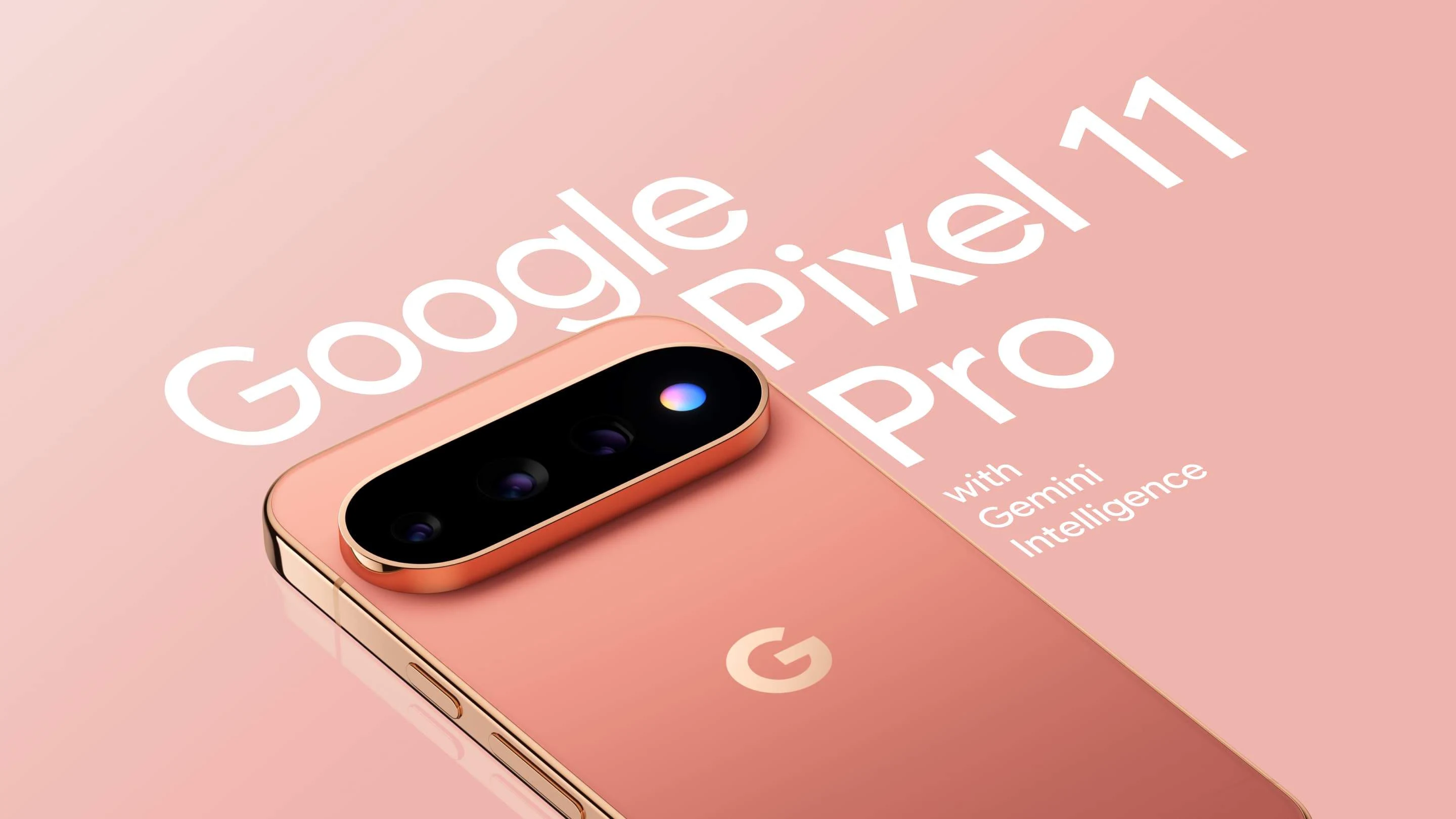
Google Pixel 11 Pro and Pro XL land · Tensor G6, a 48 MP periscope and the brightest Pixel screen yet

By Peak Phones editorial desk · Published
Highlights: what's actually new
- Tensor G6. Google's new in-house chip, which it says runs on-device AI up to 3.5× faster while using up to 3.5× less energy than the G5.
- A 48 MP 5× periscope on a 1/1.95-inch sensor, joined by a 50 MP 1/1.3-inch main and a 48 MP ultra-wide that finally autofocuses and does macro.
- Pro Zoom to 120×, with Google claiming optical quality at 0.5×, 1×, 2×, 5× and 10×.
- The brightest Pixel panel yet: Super Actua LTPO at 2,400 nits HDR and 3,600 nits peak, 1–120 Hz, now with an anti-scratch shield.
- 8K video at 24 and 30 fps through Video Boost, plus 4K at up to 60 fps on both the rear and the 42 MP front camera.
- Seven years of OS, security and Pixel Drop updates, from Android 17.
- Two sizes: 6.3-inch Pro at 204 g, 6.8-inch Pro XL at 226 g with a 5,115 mAh cell.
- €1,199 and €1,399, pre-orders open now, on sale 20 August 2026.
Google's flagship pair, sharpened rather than reinvented
The Pixel 11 Pro and Pro XL are not a redesign. They are the same slab of aluminium and Gorilla Glass Victus 2 that the line has worn for two generations, with the camera bar still spanning the back. What changed sits underneath.
The headline is the Tensor G6 and what Google wants it for. The company's pitch is not raw benchmark position but on-device AI throughput: up to 3.5× faster at AI tasks than the G5, at up to 3.5× less energy. That is the engine behind the camera processing, the live translation and the proactive Gemini features Google spent most of its announcement on.
The honest framing is that Google is competing on software and support, not on hardware maximalism. A 50 MP main sensor and a 4,850 mAh battery are modest numbers in a year when the HONOR Magic8 Pro ships a 200 MP periscope and 7,100 mAh, and the Samsung Galaxy S26 Ultra pushes its own big-sensor stack. What Google offers instead is seven years of updates and a camera pipeline that has historically punched above its sensor size.
Design and build: two sizes, one shape
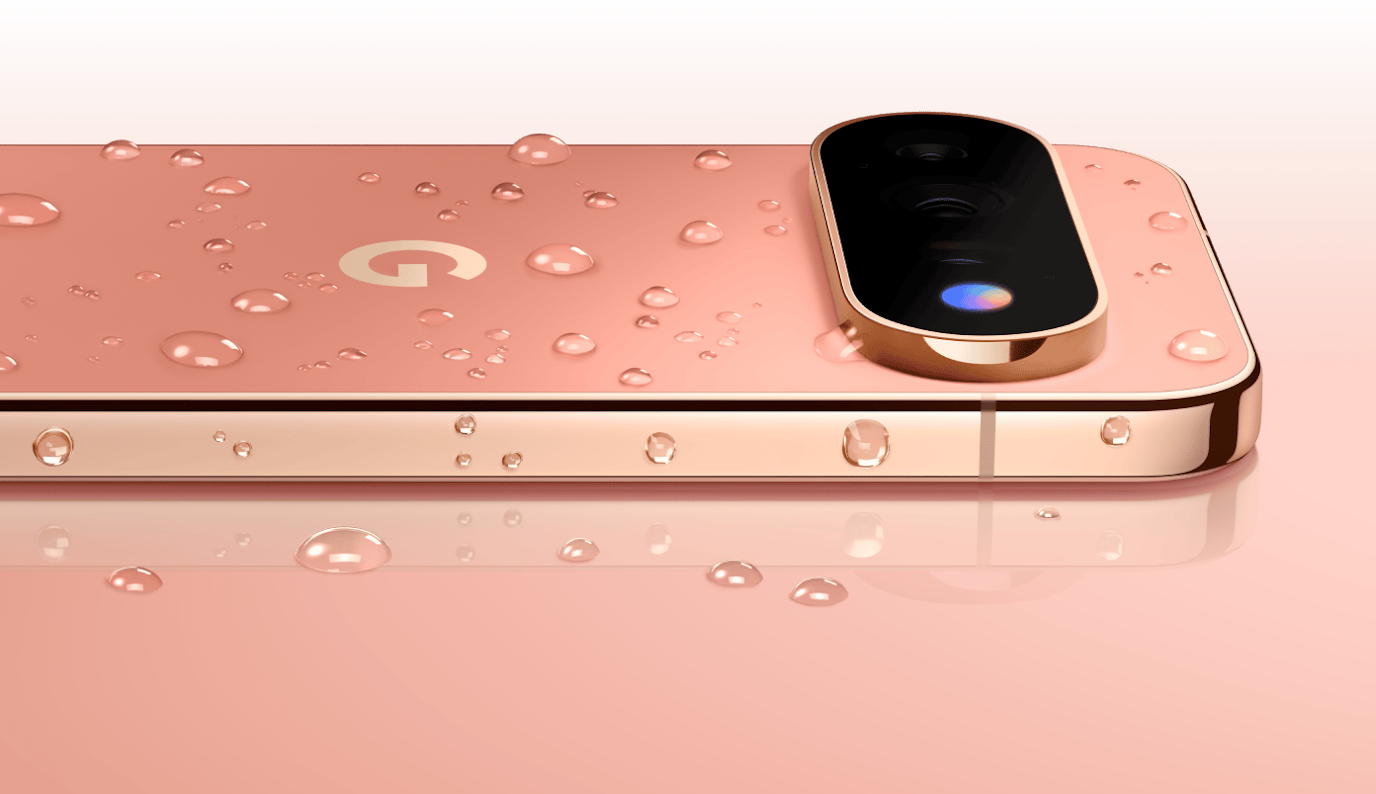
The Pro measures 152.7 × 71.9 × 8.4 mm and weighs 204 g. The Pro XL is 162.7 × 76.5 × 8.5 mm and 226 g. Both use a spacecraft-grade aluminium frame with 100% recycled aluminium in the housing, a Gorilla Glass Victus 2 back with a silky matte finish, and IP68 dust and water resistance.
The camera bar runs the full width of the back, so the phone sits flat on a desk and does not rock when you tap a corner. That is worth less than it once was: Apple and Samsung still put a raised island in the corner, but most Chinese flagships now carry a module big enough to cover three quarters of the back, which lies flat for the same reason.
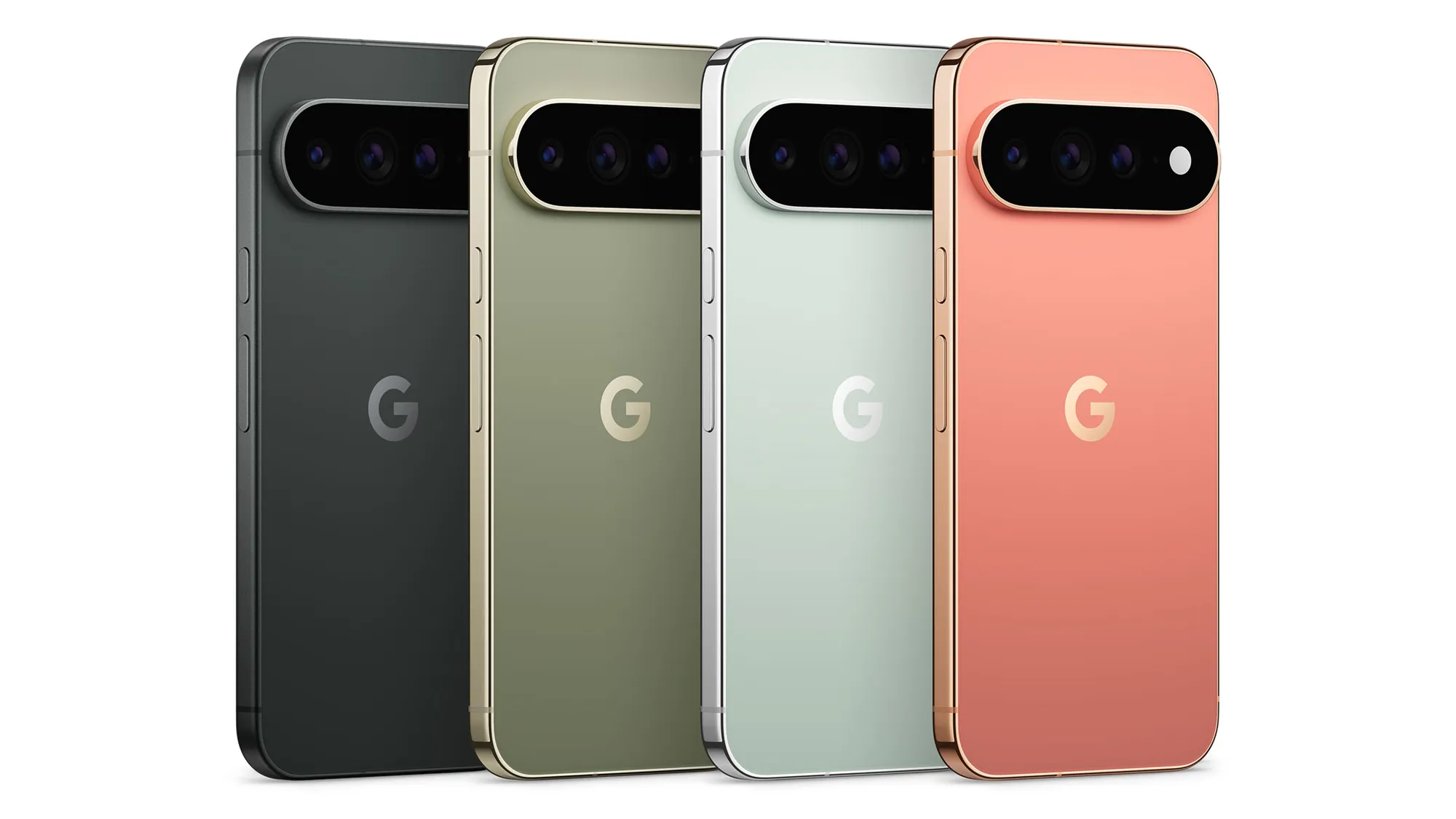
Colours are Canyon, Olive, Fog and Obsidian, with Obsidian getting a matte frame while the others are polished. Google puts recycled content at a minimum of 31% of the Pro's weight and 33% of the Pro XL's, in plastic-free packaging.
Displays: brighter, and finally scratch-hardened
Both phones use a Super Actua LTPO OLED running 1–120 Hz, so they drop to 1 Hz on a static screen. The Pro is 6.3 inches at 2856 × 1280 and 495 ppi; the Pro XL is 6.8 inches at 2992 × 1344 and 486 ppi. Aspect ratio is 20:9 on both.
Brightness is where the generation moved: 2,400 nits in HDR and 3,600 nits at peak, against 2,000 and 3,000 on the standard Pixel 11. Contrast is quoted above 2,000,000:1 with full 24-bit colour.
The more practical upgrade is the cover glass. It is still Gorilla Glass Victus 2, but Google has added an anti-scratch shield on the Pro models, addressing one of the more common complaints about recent Pixels.
Performance: Tensor G6 and a lot of memory
The Tensor G6 pairs with the Titan M3 security coprocessor and a hardware security stack that now includes quantum-safe secure boot. Google quotes the generational gain in AI terms rather than CPU terms, which tells you where the silicon budget went.
Memory starts at 12 GB with 256 GB of storage and moves to 16 GB on the 512 GB and 1 TB tiers, where the storage also switches to Zoned UFS. Both phones share the same three configurations.
Connectivity is a clear step above the standard Pixel 11: Wi-Fi 7 rather than Wi-Fi 6E, Bluetooth 6, ultra-wideband, Thread and dual-band GNSS. The port is USB-C 3.2, and the SIM setup is one nano-SIM plus eSIM.
Battery and charging: the number that will divide people
The Pro carries 4,850 mAh (4,707 rated) and the Pro XL 5,115 mAh (5,000 rated). Google quotes 30+ hours of battery life for both and says the Pro XL can pick up 15 hours of use from 15 minutes on the cable.
Wired charging tops out at 30 W over USB-C PPS, good for about 55% in 30 minutes, and the charger is not in the box. Wireless is 25 W over the Qi2.2-certified Pixelsnap system, with the magnetic accessory ecosystem that implies.
Chinese flagships at this price ship 7,000 mAh silicon-carbon cells and 100 W or more, and even the cheaper standard Pixel 11 has a slightly larger battery than the Pro. Google's counter-argument is efficiency rather than capacity, and that is a claim only real-world use will settle.
Cameras: the ultra-wide and the telephoto do the heavy lifting
The main camera is a 50 MP Octa PD sensor at f/1.68 on a 1/1.3-inch chip with an 82° field of view. That part is familiar.
The interesting changes sit either side of it. The ultra-wide is now a 48 MP Quad PD unit at f/1.7 covering 123°, with autofocus and Macro Focus, replacing the fixed-focus part on the standard model. The telephoto is a 48 MP Quad PD periscope at f/2.8 on a 1/1.95-inch sensor with 5× optical zoom and OIS, which Google says gains 30% in light sensitivity this generation. Pro Zoom reaches 120×, with claimed optical quality at 0.5×, 1×, 2×, 5× and 10×, and Portrait Mode now works at 5×.
The selfie camera is a 42 MP Dual PD with autofocus and a 103° field of view, a genuine gap over the standard Pixel's 10.5 MP unit.
Video is the other reason to take the Pro seriously: 8K at 24 and 30 fps via Video Boost, 4K at 24, 30 and 60 fps, 1080p slow motion to 240 fps, and 4K at 30 or 60 fps from the front camera. Support hardware includes multi-zone laser autofocus plus spectral and flicker sensors.
Software: seven years, and Gemini everywhere
Both phones launch on Android 17 with seven years of OS, security and Pixel Drop updates. That remains the strongest support commitment in Android, and on a phone bought at €1,199 it is a material part of the value.
The software story is Gemini. Google's framing for this generation is proactive help rather than a chat box you open: surfacing what you need before you ask, handling multi-step tasks, and doing more of it on-device thanks to the G6's efficiency. The Pixel Camera and editing suite carry the usual toolkit, including Magic Eraser, Best Take, Add Me, Photo Unblur and Zoom Enhance, with a Creator suite on the video side.
Security is a genuine differentiator too: VPN by Google at no extra cost, a certified Titan M3 chip, quantum-safe secure boot in hardware, and scam protection built into Phone and Messages.
Price and availability
The Pixel 11 Pro starts at €1,199 in Europe, £1,079 in the UK and $1,099 in the US, for 12 GB with 256 GB. The Pixel 11 Pro XL starts at €1,399. Both step up to 16 GB with 512 GB or 1 TB.
Pre-orders opened with the announcement on 12 August, and both phones go on sale 20 August 2026. Google sells the Pixel directly in the US as well as Europe, so unlike most of the brands in this class there is no import question here.
Launch promotions are heavy: Google is running trade-in credit that reaches into four figures in several markets, and bundling six months of Google AI Pro with the Pro models. European retailers have the pair listed for the same 20 August date, generally a little above Google's own list price.
Key specifications
- Main display
- 6.3″ LTPO OLED
- Chipset
- Google Tensor G6
- Telephoto
- 48 MP 5× optical
- Battery
- 4850 mAh
- Software support
- 7 × OS + security
- Ingress protection
- IP68
What we like
- Seven years of OS, security and Pixel Drop updates, still the best support pledge in Android
- 48 MP 5× periscope on a 1/1.95″ sensor, with Pro Zoom to 120× and portraits at 5×
- Ultra-wide finally gets 48 MP, autofocus and macro instead of a fixed-focus part
- 3,600 nits peak on a 1–120 Hz LTPO panel, now with an anti-scratch shield
- 8K video via Video Boost and a 42 MP autofocus selfie camera
- Wi-Fi 7, UWB, Thread and quantum-safe secure boot in hardware
What could be better
- 4,850 mAh in the Pro is small for the price, and less than the cheaper standard Pixel 11
- 30 W wired charging is half what rivals at this price offer, and there is no charger in the box
- The 50 MP main sensor is unchanged in headline terms while rivals ship 200 MP hardware
- The Pro XL costs €200 more for a bigger screen and 265 mAh, little else
- Google still quotes AI gains rather than CPU or GPU numbers for Tensor
Verdict
The Pixel 11 Pro is the clearest statement yet of what Google actually sells: not the biggest sensor or the fastest charger, but the longest support, the best-behaved camera processing and the deepest Gemini integration on Android. The upgrades this year are real and well chosen, with the 48 MP autofocus ultra-wide and the brighter, scratch-hardened panel doing more for everyday use than a spec-sheet reader would guess. The battery is the sticking point. At €1,199, 4,850 mAh and 30 W charging are hard to defend against Chinese flagships offering 7,000 mAh and triple-digit wattage, and Google's efficiency argument has to hold up in real use for the maths to work. If you buy phones for the camera pipeline and intend to keep one for five years or more, seven years of updates makes this an easy recommendation. If you want the hardware maximum for your money, it is not here. The Pro XL only makes sense if you specifically want the 6.8-inch screen, because €200 buys very little else.
Sources
More news

August 13, 2026
HONOR Robot Phone launches · A camera that leaves the body
HONOR has built the strangest flagship of the year: a motorised, four-degree-of-freedom titanium gimbal that lifts a 200 MP main camera clear of the body and pans, tilts and rolls it under its own power. Behind it sit a second 200 MP sensor on a periscope, ARRI-developed LogC3 capture, a 7060 mAh silicon-carbon cell and Snapdragon 8 Elite Gen 5. China gets it first, from ¥9 999 (≈ €1 280).
Read more
July 14, 2026
Huawei Pura 90s Pro Max and Pura 90s Pro go global · A 200 MP telephoto leads the way
Huawei brought the Pura 90s Pro Max and its smaller Pura 90s Pro sibling to the world stage in Kuala Lumpur, led by a 200 MP 1/1.28-inch telephoto, a variable-aperture 50 MP main camera, 100 W wired charging and 5G. EMUI 16 still comes without preloaded Google services – but AppGallery now guides their install, so the caveat that really remains is banking apps that insist on Play Integrity.
Read more
July 1, 2026
Motorola Signature · Four 50 MP cameras and a flagship chip in a 6.99 mm body
Motorola's Signature opens a new ultra-premium line, and it makes a real entrance: at 6.99 mm and 186 g it is the thinnest flagship we cover, yet it still carries a Snapdragon 8 Gen 5, four 50 MP cameras with a DXOMARK Gold Label, a 6.8-inch 165 Hz screen that peaks at 6,200 nits, a 5,200 mAh silicon-carbon battery and 90 W charging. It launched from £899.99, and five months on it already sells for less, which makes a real flagship feel almost attainable.
Read more